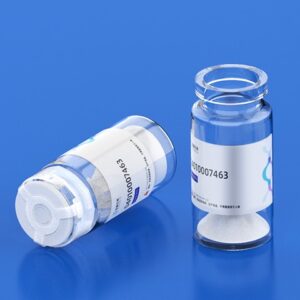
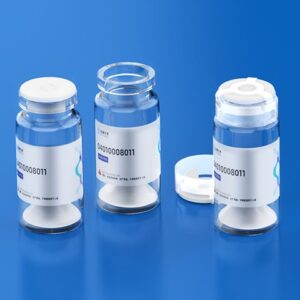
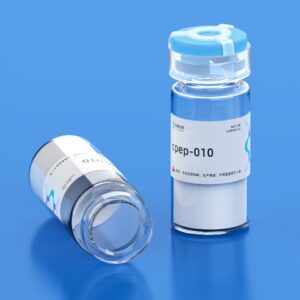
Peptide 5f is an antimicrobial peptide derived from bumblebee venom. Peptide 5f has antibacterial activity against bacteria and fungi. Peptide 5f has almost no hemolytic activity against human erythrocytes. Product Details Product Name Peptide 5f Biological activity Peptide 5f is an antimicrobial peptide derived from wasp venom. Peptide 5f has antimicrobial activity against bacteria and…
Peptide 5g is an antimicrobial peptide. Peptide 5g inhibits E. coli, S. aureus, and C. albicans with MIC values of 30, 10, and 12.5 ??g/mL, respectively. Product Details Product Name Peptide 5g Biological activity Peptide 5g is an antimicrobial peptide. Peptide 5g inhibits E. coli, S. aureus, and C. albicans with MIC values of 30,…
Peptide HV2 is an antibiotic that exerts anti-inflammatory effects by inhibiting TNF-??. Peptide HV2 has antibacterial activity. Product Details Product Name Peptide HV2 Biological activity Peptide HV2 is an antibiotic that exerts anti-inflammatory effects by inhibiting TNF-??. Peptide HV2 has antibacterial activity. Sequence Shortening RRVHVH-{dVal}-PGVHVHVRR-NH2 Storage Please store the product under the recommended conditions in…
Peptide P2.2 is a non-ribosomal peptide and an antimicrobial peptide. Peptide P2.2 has potent antibacterial activity, with MIC50 values of 4 ??M and 32 ??M against V. parahaemolyticus and V. alginolyticus, respectively. Peptide P2.2 combined with antibiotics (such as Ofloxacin (HY-B0125) and Linezolid (HY-10394)) enhances synergistic antibacterial effects, with negligible hemolytic activity. Peptide P2.2 disrupts…
Product Name Pancreastatin (33-49), porcine Biological activity Pancreastatin (33-49), porcine is a pancreastatin fragment. Pancreastatin is a peptide isolated from porcine pancreas which has insulin-suppressive actions in vitro. Pancreastatin (33-49), porcine enhances the priming effect of glucose. CAS Number 106507-61-3 Sequence Shortening Sequence Shortening QEEEEETAGAPQGLFRG-NH2 Storage Please store the product under the recommended conditions in…
Product Name Neuropeptide S (human) Biological activity Neuropeptide S human, a neuropeptide, is a potent cognate neuropeptide S receptor (NPSR) agonist. Neuropeptide S human can be used for Alzheimer’s disease (AD) research. Molecular Weight 2187.48 Formula Formula C93H155N31O28S CAS Number 412938-67-1 Appearance Solid Color White to off-white Sequence Sequence Ser-Phe-Arg-Asn-Gly-Val-Gly-Thr-Gly-Met-Lys-Lys-Thr-Ser-Phe-Gln-Arg-Ala-Lys-Ser Sequence Shortening Sequence Shortening SFRNGVGTGMKKTSFQRAKS
Peptide YY (PYY) (3-36), Human is an endogenous appetite-suppressing peptide that acts as a selective agonist of neuropeptide Y (NPY) Y2 receptor. Peptide YY (PYY) (3-36), Human inhibits intestinal fluid secretion, colonic propulsion, and reduces fecal output in mouse models. Peptide YY (PYY) (3-36), Human inhibits dmPGE2-, 5HT (HY-B1473A)-, and Castor oil (HY-107799)-induced diarrhea in…
Product Name ACTH (4-11) Biological activity ACTH (4-11), an adrenocorticotropin hormone fragment, possesses a weak α-melanocyte stimulating hormone (α-MSH) potency only at high doses (100 and 1000 nM). Formula Formula C50H71N15O11S CAS Number 67224-41-3 Appearance Solid Color White to off-white Sequence Sequence Met-Glu-His-Phe-Arg-Trp-Gly-Lys Sequence Shortening Sequence Shortening MEHFRWGK Storage Sealed storage, away from moisture and…
Product Name Cholecystokinin Biological activity Cholecystokinin is a peptide hormone. Cholecystokinin, as a hunger suppressant, inhibits food intake and stimulates the digestion of fat and protein. Cholecystokinin can be used for the research of gastrointestinal system. Formula Formula C167H263N51O52S4 CAS Number 9011-97-6 Appearance Solid Color White to off-white Sequence Sequence Lys-Ala-Pro-Ser-Gly-Arg-Met-Ser-Ile-Val-Lys-Asn-Leu-Gln-Asn-Leu-Asp-Pro-Ser-His-Arg-Ile-Ser-Asp-Arg-Asp-{Tyr(SO3H)}-Met-Gly-Trp-Met-Asp-Phe-NH2 Sequence Shortening Sequence Shortening…
Product Name Neuropeptide Y (human,rat,mouse) TFA Biological activity Neuropeptide Y (human) TFA is involved in Alzheimer’s disease (AD) and protects rat cortical neurons against β-Amyloid toxicity. Formula Formula C191H286F3N55O59S Appearance Solid Color White to off-white Sequence Sequence Tyr-Pro-Ser-Lys-Pro-Asp-Asn-Pro-Gly-Glu-Asp-Ala-Pro-Ala-Glu-Asp-Met-Ala-Arg-Tyr-Tyr-Ser-Ala-Leu-Arg-His-Tyr-Ile-Asn-Leu-Ile-Thr-Arg-Gln-Arg-Tyr-NH2 Sequence Shortening Sequence Shortening YPSKPDNPGEDAPAEDMARYYSALRHYINLITRQRY-NH2 Storage Sealed storage, away from moisture and light, under nitrogen Powder -80??C…
Product Name Neuropeptide S (mouse) Biological activity Neuropeptide S (mouse) is a bioactive peptide. Neuropeptide S (mouse), as a neurotransmitter/neuromodulator of 20 amino acids, can be used for the research of arousal, anxiety, locomotion, feeding behaviors, memory and agent addiction. CAS Number 412938-74-0 Appearance Solid Color White to off-white Sequence Sequence Ser-Phe-Arg-Asn-Gly-Val-Gly-Ser-Gly-Ala-Lys-Lys-Thr-Ser-Phe-Arg-Arg-Ala-Lys-Gln Sequence Shortening Sequence…
Product Name Spexin-2 (53-70), human,mouse,rat Biological activity Spexin-2 (53-70), human,mouse,rat (NPQ 53-70) is a biological active peptide. (This is Spexin-2 (53-70), non-amidated version of the novel peptide hormone that is derived from prohormone proNPQ and is conserved amongst mammalian species. It is a central modulator of cardiovascular and renal function. Spexin-2, when administered to rats,…
PepW is a potent antimicrobial peptide targeting the capsule of multidrug-resistant Klebsiella pneumoniae (MIC=2-8 ??M). PepW achieves bactericidal effects through capsular polysaccharide aggregation and structural disruption. PepW is expected to be used in research on infectious diseases caused by Gram-negative bacteria (such as pneumonia and sepsis). Product Details Product Name PepW Biological activity PepW is…
Product Name β-CGRP, human TFA Biological activity β-CGRP, human TFA (Human β-CGRP TFA) is one of calcitonin peptides, acts via the complex of calcitonin-receptor-like receptor (CRLR) and receptor-activity-modifying protein (RAMP), with IC50s of 1 nM and 300 nM for CRLR/RAMP1 and CRLR/RAMP2 in cells. Molecular Weight 3793.41 (free base) Formula Formula C162H267N51O48S3.xC2HF3O2 Appearance Solid Color…
Periplanetasin-2 is an antimicrobial peptide that induces oxidative stress by producing reactive oxygen species (ROS) and lipid peroxidation. Periplanetasin-2 can induce apoptosis. Product Details Product Name Periplanetasin-2 Biological activity Periplanetasin-2 is an antifungal peptide that induces oxidative stress through the production of reactive oxygen species (ROS) and lipid peroxidation. Periplanetasin-2 can also induce apoptosis. Sequence…
Periplanetasin-4 is an antimicrobial peptide that can be extracted from the American cockroach (Periplaneta americana). Periplanetasin-4 reduces cell rounding and apoptosis. Periplanetasin-4 blocks Clostridium difficile toxin A-induced ROS production and downstream activation of p38 MAPK and p21. Periplanetasin-4 significantly increases mitochondrial calcium levels in Candida albicans ATCC 90028 cells, decreases DPH fluorescence intensity, and causes…
Contains information related to marketing campaigns of the user. These are shared with Google AdWords / Google Ads when the Google Ads and Google Analytics accounts are linked together.
90 days
__utma
ID used to identify users and sessions
2 years after last activity
__utmt
Used to monitor number of Google Analytics server requests
10 minutes
__utmb
Used to distinguish new sessions and visits. This cookie is set when the GA.js javascript library is loaded and there is no existing __utmb cookie. The cookie is updated every time data is sent to the Google Analytics server.
30 minutes after last activity
__utmc
Used only with old Urchin versions of Google Analytics and not with GA.js. Was used to distinguish between new sessions and visits at the end of a session.
End of session (browser)
__utmz
Contains information about the traffic source or campaign that directed user to the website. The cookie is set when the GA.js javascript is loaded and updated when data is sent to the Google Anaytics server
6 months after last activity
__utmv
Contains custom information set by the web developer via the _setCustomVar method in Google Analytics. This cookie is updated every time new data is sent to the Google Analytics server.
2 years after last activity
__utmx
Used to determine whether a user is included in an A / B or Multivariate test.
18 months
_ga
ID used to identify users
2 years
_gali
Used by Google Analytics to determine which links on a page are being clicked
30 seconds
_ga_
ID used to identify users
2 years
_gid
ID used to identify users for 24 hours after last activity
24 hours
_gat
Used to monitor number of Google Analytics server requests when using Google Tag Manager