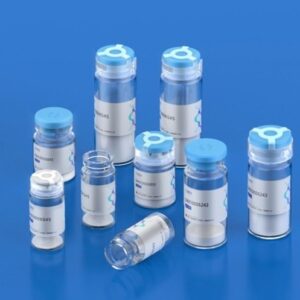
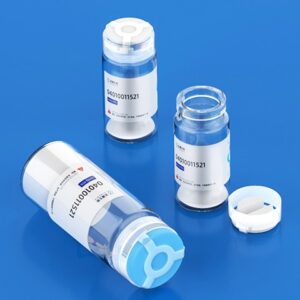
Peptide P2.2 is a non-ribosomal peptide and an antimicrobial peptide. Peptide P2.2 has potent antibacterial activity, with MIC50 values of 4 ??M and 32 ??M against V. parahaemolyticus and V. alginolyticus, respectively. Peptide P2.2 combined with antibiotics (such as Ofloxacin (HY-B0125) and Linezolid (HY-10394)) enhances synergistic antibacterial effects, with negligible hemolytic activity. Peptide P2.2 disrupts…
PepW is a potent antimicrobial peptide targeting the capsule of multidrug-resistant Klebsiella pneumoniae (MIC=2-8 ??M). PepW achieves bactericidal effects through capsular polysaccharide aggregation and structural disruption. PepW is expected to be used in research on infectious diseases caused by Gram-negative bacteria (such as pneumonia and sepsis). Product Details Product Name PepW Biological activity PepW is…
Periplanetasin-2 is an antimicrobial peptide that induces oxidative stress by producing reactive oxygen species (ROS) and lipid peroxidation. Periplanetasin-2 can induce apoptosis. Product Details Product Name Periplanetasin-2 Biological activity Periplanetasin-2 is an antifungal peptide that induces oxidative stress through the production of reactive oxygen species (ROS) and lipid peroxidation. Periplanetasin-2 can also induce apoptosis. Sequence…
Periplanetasin-4 is an antimicrobial peptide that can be extracted from the American cockroach (Periplaneta americana). Periplanetasin-4 reduces cell rounding and apoptosis. Periplanetasin-4 blocks Clostridium difficile toxin A-induced ROS production and downstream activation of p38 MAPK and p21. Periplanetasin-4 significantly increases mitochondrial calcium levels in Candida albicans ATCC 90028 cells, decreases DPH fluorescence intensity, and causes…
Pexiganan (MSI 78) is an orally active antimicrobial peptide with broad-spectrum bactericidal activity. Pexiganan disrupts bacterial cell membranes, inducing peptidoglycan damage and cell lysis. Pexiganan TFA can be used in research on bacterial infections. Product Details Product Name Pexiganan Biological activity Pexiganan (MSI 78) is an orally active antimicrobial peptide with broad-spectrum bactericidal. Pexiganan disrupts…
Pexiganan (MSI 78) acetate is an orally active antimicrobial peptide with broad-spectrum bactericidal activity. Pexiganan acetate disrupts bacterial cell membranes, inducing peptidoglycan damage and cell lysis. Pexiganan TFA can be used in research on bacterial infections. Product Details Product Name Pexiganan acetate Biological activity Pexiganan (MSI 78) acetate is an orally active antimicrobial peptide with…
Pezadeftide is a potent antifungal peptide. Pezadeftide enters fungal cells and triggers a rapid mitochondrial response, leading to mitochondrial membrane hyperpolarization. Product Details Product Name Pezadeftide Biological activity Pezadeftide is a potent antifungal peptide. Pezadeftide can enter fungal cells and cause a rapid mitochondrial response that results in hyperpolarization of the mitochondrial membrane. Sequence Ala-Lys-Val-Cys-Thr-Lys-Pro-Ser-Lys-Phe-Phe-Lys-Gly-Leu-Cys-Gly-Thr-Asp-Gly-Ala-Cys-Thr-Thr-Ala-Cys-Arg-Lys-Glu-Gly-Leu-His-Ser-Gly-Tyr-Cys-Gln-Leu-Lys-Gly-Phe-Leu-Asn-Ser-Val-Cys-Val-Cys-Arg-Lys-His-Cys…
PGLa is an antimicrobial peptide containing 21 residues. PGLa is a member of the magainin family of antimicrobial peptides found in frog skin and its secretions. Product Details Product Name PGLa Biological activity PGLa, a 21-residue peptide, is an antimicrobial peptide. PGLa is a member of the magainin family of antibiotic peptides found in frog…
PGLa TFA is an antimicrobial peptide containing 21 residues. PGLa TFA is a member of the magainin family of antimicrobial peptides found in frog skin and its secretions. Product Details Product Name PGLa TFA Biological activity PGLa TFA, a 21-residue peptide, is an antimicrobial peptide. PGLa TFA is a member of the magainin family of…
PhD1 is an antimicrobial peptide derived from monkey blood leukocytes. PhD1 is active against bacteria and the fungus Candida albicans. Product Details Product Name PhD1 Biological activity PhD1 is an antimicrobial peptide derived from monkey white blood cells. PhD1 has activity against bacteria and fungus Candida albicans. Sequence Shortening RRICRCRIGRCLGLEVYFGVCFLHGRLARRCCR (Disulfide bridge:Cys4-Cys32,Cys6-Cys21,Cys11-Cys31) Storage Please store…
PhD2 is an antimicrobial peptide derived from monkey blood leukocytes. PhD2 is active against bacteria and the fungus Candida albicans. Product Details Product Name PhD2 Biological activity PhD2 is an antimicrobial peptide derived from monkey white blood cells. PhD2 has activity against bacteria and fungus Candida albicans. Sequence Shortening RICRCRIGRCLGLEVYFGVCFLHGRLARRCCR (Disulfide bridge:Cys3-Cys31, Cys5-Cys20, Cys10-Cys30) Storage…
PhD3 is an antimicrobial peptide derived from monkey blood leukocytes. PhD3 is active against bacteria and the fungus Candida albicans. Product Details Product Name PhD3 Biological activity PhD3 is an antimicrobial peptide derived from monkey white blood cells. PhD3 has activity against bacteria and fungus Candida albicans. Sequence Shortening RTCRCRLGRCSRRESYSGSCNINGRIYSLCCR (Disulfide bridge:Cys3-Cys31, Cys5-Cys20, Cys10-Cys30) Storage…
PhD4 is an antimicrobial peptide derived from monkey blood leukocytes. PhD4 is active against bacteria and the fungus Candida albicans. Product Details Product Name PhD4 Biological activity PhD4 is an antimicrobial peptide derived from monkey white blood cells. PhD4 has activity against bacteria and fungus Candida albicans. Sequence Shortening ACYCRIPACFAGERRYGTCFYLGRVWAFCC (Disulfide bridge:Cys2-Cys30, Cys4-Cys19,Cys9-Cys29) Storage Please…
Pilosulin-1 (86-112) is a specific peptide fragment of the Pilosulin 1 protein. Pilosulin 1 is the major allergen (Myr p 1) in the venom of the Australian jumper ant (Myrmecia pilosula) and has potent cytotoxic and antibacterial activities. Pilosulin-1 (86-112) is an IgE-binding component and is a minor allergen. Product Details Product Name Pilosulin-1(86-112) Biological…
Pilosulin-2 (49-75) is a polypeptide composed of 27 amino acids. Pilosulin-2 (49-75) can be isolated from Myrmecia pilosula venom. Product Details Product Name Pilosulin-2(49-75) Biological activity Pilosulin-2 (49-75) is a polypeptide composed of 27 amino acids. Pilosulin-2 (49-75) can be isolated from the venom of Myrmecia pilosula. Sequence Shortening IDWKKVDWKKVSKKTCKVMLKACKFLG (Disulfide bridge:Cys16-Cys23) Storage Please store…
Plantaricin A is an antimicrobial peptide that can be extracted from Lactobacillus plantarum. Plantaricin A has a synergistic effect with ciprofloxacin. Plantaricin A exhibits antibacterial activity. Plantaricin A can increase the membrane potential and intracellular reactive oxygen species (ROS) levels of Staphylococcus aureus. Plantaricin A inhibits the function of efflux pumps by binding to them…
Contains information related to marketing campaigns of the user. These are shared with Google AdWords / Google Ads when the Google Ads and Google Analytics accounts are linked together.
90 days
__utma
ID used to identify users and sessions
2 years after last activity
__utmt
Used to monitor number of Google Analytics server requests
10 minutes
__utmb
Used to distinguish new sessions and visits. This cookie is set when the GA.js javascript library is loaded and there is no existing __utmb cookie. The cookie is updated every time data is sent to the Google Analytics server.
30 minutes after last activity
__utmc
Used only with old Urchin versions of Google Analytics and not with GA.js. Was used to distinguish between new sessions and visits at the end of a session.
End of session (browser)
__utmz
Contains information about the traffic source or campaign that directed user to the website. The cookie is set when the GA.js javascript is loaded and updated when data is sent to the Google Anaytics server
6 months after last activity
__utmv
Contains custom information set by the web developer via the _setCustomVar method in Google Analytics. This cookie is updated every time new data is sent to the Google Analytics server.
2 years after last activity
__utmx
Used to determine whether a user is included in an A / B or Multivariate test.
18 months
_ga
ID used to identify users
2 years
_gali
Used by Google Analytics to determine which links on a page are being clicked
30 seconds
_ga_
ID used to identify users
2 years
_gid
ID used to identify users for 24 hours after last activity
24 hours
_gat
Used to monitor number of Google Analytics server requests when using Google Tag Manager