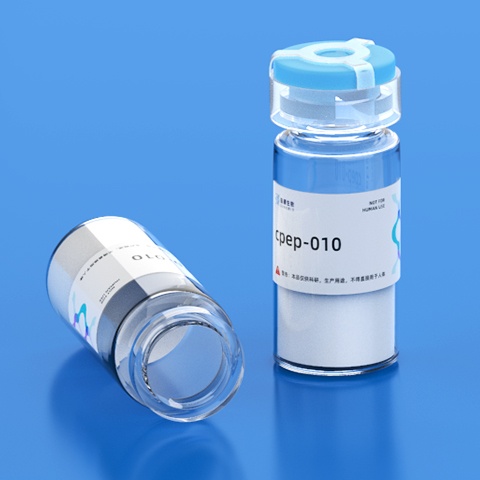
Gy-CATH
Description
Gy-CATH is an anionic antimicrobial peptide. Gy-CATH activates the MAPK and NF-??B signaling pathways (with elevated phosphorylation levels of ERK, p38, JNK, p65, and I??B??). Gy-CATH upregulates the expression levels of three physiological anticoagulant pathways. Gy-CATH inhibits ADP-, collagen-, and PMA-induced platelet aggregation. Gy-CATH has no direct antibacterial activity itself, but has significant protective effects in mice infected with Staphylococcus aureus, E. coli, and methicillin-resistant Staphylococcus aureus. Gy-CATH has strong immunomodulatory activity and enhances macrophage- and neutrophil-mediated bactericidal functions. Gy-CATH significantly reduces pulmonary fibrin deposition and prevents thrombosis in mice.
Product Details
| Product Name | Gy-CATH |
| Biological activity | Gy-CATH is an anionic antimicrobial peptide. Gy-CATH activates MAPK and NF-??B signaling pathways (elevated levels of phospho-ERK, -p38, -JNK, -p65, and -I??B??). Gy-CATH upregulates the expression levels of three physiological anticoagulant pathways. Gy-CATH inhibits ADP-, Collagen-, and PMA-induced platelet aggregation. Gy-CATH has no direct antimicrobial activity, but shows significant preventive abilities against mice infected with Staphylococcus aureus, Escherichia coli, and Methicillin (HY-121544)-resistant Staphylococcus aureus. Gy-CATH exhibits potent immunomodulatory activity, enhancing macrophage-and neutrophil-mediated bactericidal functions. Gy-CATH significantly reduces the extent of pulmonary fibrin deposition and prevents thrombosis in mice. |
| Sequence Shortening | AEEEAEKTHKTECLECIFTLLPPA (Disulfide bridge: Cys13-Cys16) |
| Storage | Please store the product under the recommended conditions in the Certificate of Analysis. |